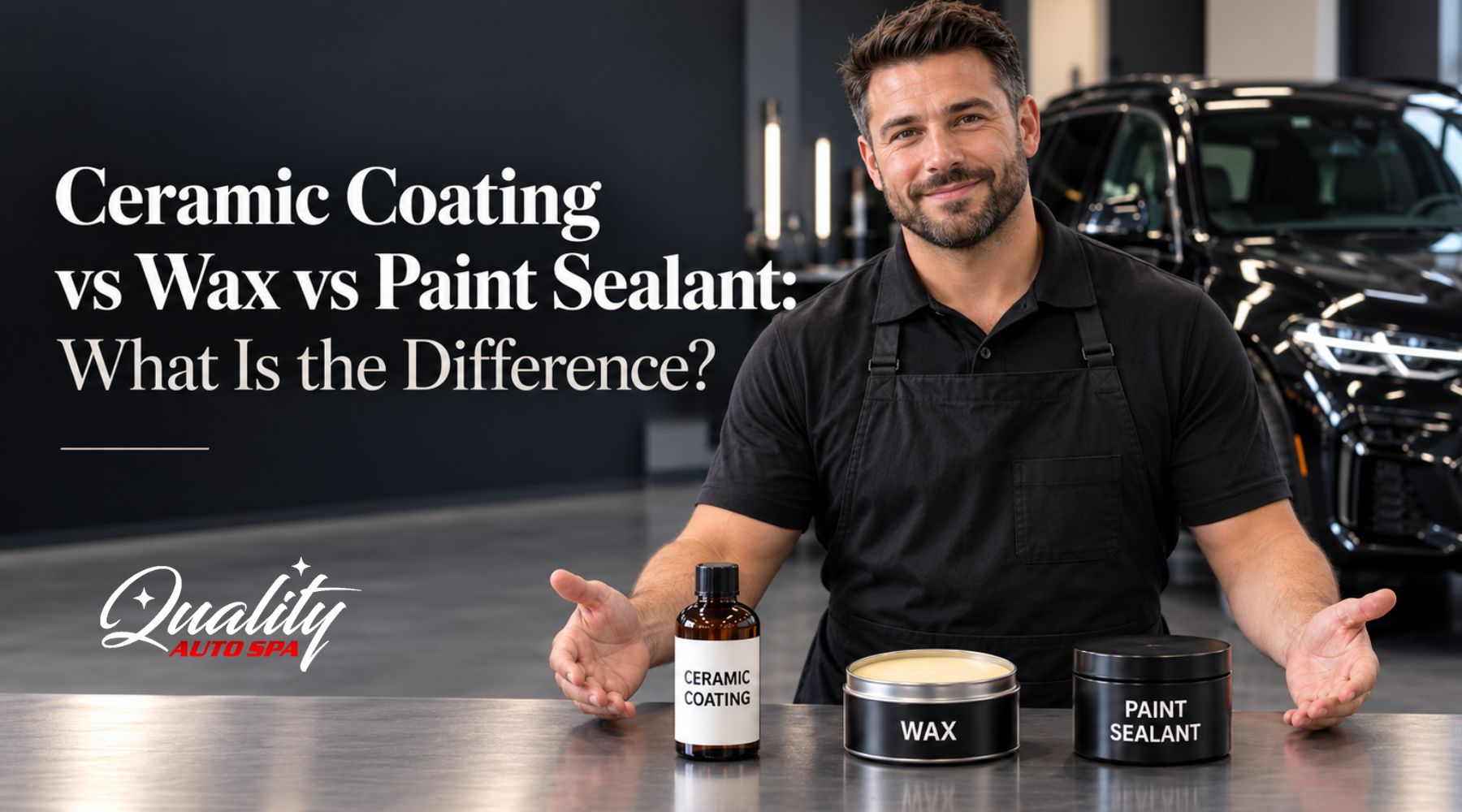
Wax, paint sealant, and ceramic coating can all add a protective layer over automotive paint, but they are not simply three versions of the same product. Traditional wax is often one of the easiest, lowest-commitment paint-protection options to apply and renew. Paint sealant is typically a synthetic or hybrid category of paint protection that aims to extend protection and water behavior beyond a traditional wax.
A professional ceramic coating typically involves more deliberate surface preparation and a higher upfront commitment, but it is designed for longer-term hydrophobic behavior and resistance to everyday environmental contamination when maintained correctly.
None of these options makes paint scratch-proof or rock-chip-proof, and none eliminates washing. The right choice depends on how often you want to renew the protection, the condition of the paint, how the vehicle is driven and parked, and how much maintenance you are willing to do.
For owners considering professional ceramic coating options , the useful question is not simply which product sounds strongest. It is which protection approach fits the way you actually own the vehicle. For vehicle owners in St. James and across Long Island, the practical choice often comes down to how the car is parked, driven, washed, and how often the owner wants to renew its protection.
- ✓ Compare lower-commitment and longer-term protection options
- ✓ Discuss paint condition, preparation, and maintenance expectations
- ✓ Get guidance based on how you actually drive, park, and care for the vehicle
The Quick Difference Between Wax, Paint Sealant, and Ceramic Coating
| Option | Best Fit | Preparation | Maintenance Pattern | Cost / Commitment |
|---|---|---|---|---|
| Wax | Frequent DIY detailing | Clean, prepared paint | Renew more often | Lower initial commitment |
| Paint Sealant | Longer-interval DIY protection | Clean, prepared paint | Product-dependent renewal | Moderate commitment |
| Ceramic Coating | Longer-term professional protection | More deliberate prep | Coating-safe routine care | Higher initial investment |
The easiest way to compare the three is by looking at the commitment each one requires.
Car wax is a sacrificial layer that is relatively easy to apply, remove, and renew. Depending on the product, automotive wax may use carnauba, synthetic ingredients, or a blend. It can add gloss, slickness, and water beading, but it is generally chosen with the expectation that it will be reapplied more often than a longer-term coating system.
Paint sealant is a broad category of synthetic or hybrid paint protection. Many sealants are designed to give owners a straightforward application process with longer-lasting protection than a traditional wax. The category is not perfectly standardized, though. Modern products sometimes combine sealant language with ceramic or SiO2 technology, so the word on the bottle does not tell the whole story.
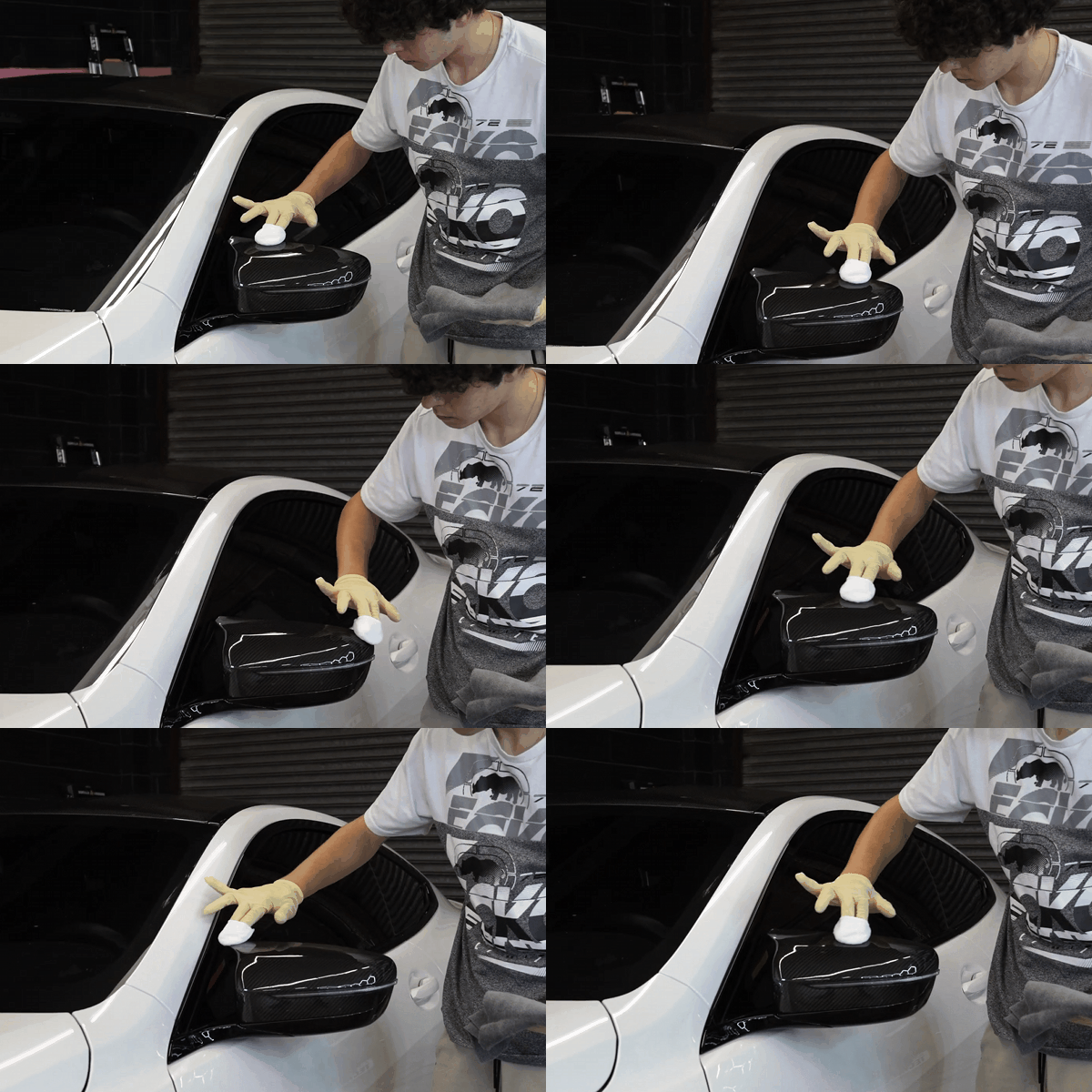
Ceramic coating is a coating system applied over a properly prepared surface and allowed to cure. Current Ceramic Pro materials describe its automotive coatings in terms of hydrophobic behavior, gloss, and resistance to environmental contamination. Those are surface-protection benefits. They should not be confused with physical impact protection.
The overlap between these labels matters. Meguiar's currently sells an M27 Pro Hybrid Ceramic Sealant that uses an SiO2-based formula while still being sold as a sealant. That is a good example of why owners should compare the exact product, application process, maintenance instructions, and intended use instead of assuming every product labeled “ceramic” is the same as a professional coating.
Car Wax: Simple, Flexible, and Easy to Renew
Wax remains useful because it is simple. An owner who enjoys regular detailing can apply a fresh layer as part of routine paint care without committing to a professional coating installation.
That flexibility is why wax still works well for owners who enjoy regular detailing. If you want to try a different product, change the finish you prefer, or refresh the protection frequently, wax makes that easy. It also tends to have a lower upfront cost than a professional coating service, although the long-term cost depends on how often you reapply it and whether you do the work yourself or pay for professional maintenance.
The tradeoff is renewal. Wax is not normally selected because the owner wants to apply one layer and forget about it for an extended period. It makes more sense for someone who is comfortable refreshing protection as part of an ongoing detailing routine.
Wax can improve gloss and water behavior, but the final appearance still depends on the paint underneath. A freshly waxed vehicle with swirls, oxidation, water-spot etching, or other defects will still have those defects. Protection products do not replace proper paint preparation.
Paint Sealant: The Broad Middle Ground
Paint sealant is often treated as the middle option between traditional wax and a professional ceramic coating, but that description needs one qualification: “sealant” covers a wide range of formulas.
A sealant should be judged by the exact product rather than by category alone.
A traditional synthetic sealant may use polymer-based chemistry. A modern hybrid sealant may incorporate SiO2 or other ingredients associated with ceramic products.
Some are wipe-on products that behave much like a familiar detailing protectant. Others have different cure times, compatibility rules, or maintenance requirements.
That means a sealant should be judged by the exact product rather than by category alone. Ask how it is applied, whether it needs curing time, what surfaces it is designed for, what maintenance products are compatible with it, and what the manufacturer says about reapplication.
For the right owner, a sealant can be a practical choice. It may provide a longer intended protection interval than a traditional wax while remaining easier to apply and renew than a professional ceramic coating. It can be especially appealing to someone who wants a DIY-friendly protectant without committing to coating-level preparation.
Ceramic Coating: More Preparation and More Commitment
A professional ceramic coating changes the ownership equation because preparation matters more.
The vehicle should be inspected and cleaned before the coating is applied. Bonded contamination, old protection products, residues, and paint defects can affect the final result.
Depending on the condition of the vehicle and the finish the owner wants, preparation may include decontamination and polishing or paint correction before the coating is installed.
That does not mean every vehicle needs the same correction package. A newer vehicle in excellent condition may need a different level of preparation than an older daily driver with visible swirls or oxidation. The purpose is to prepare the paint appropriately for the actual condition, not to force every car into the same process.
This is where professional auto detailing services can be relevant before protection. Cleaning, decontamination, and paint correction are separate from the coating itself, but they influence what the coating is being applied over.
Once installed, the coating is intended to provide a durable hydrophobic surface, support gloss, and make routine contamination easier to manage. It still needs appropriate washing and aftercare. Ceramic Pro's current aftercare guidance is explicit that its coatings are not bulletproof and require routine care.
Ceramic coating is not just a product choice. It is also a preparation and maintenance commitment.
Durability Depends on More Than the Product Category
Comparison articles often reduce wax, sealant, and ceramic coating to a simple chart with one lifespan beside each product. That is convenient, but it can be misleading.
Real-World Durability Depends on Several Variables
- ✓ The exact product and chemistry being used.
- ✓ How thoroughly the surface was prepared before application.
- ✓ Whether the product was applied and cured according to its instructions.
- ✓ How often the vehicle is driven and whether it is parked indoors or outdoors.
- ✓ Exposure to road film, bird droppings, tree sap, bug residue, pollen, mineral-rich water, and other contamination.
- ✓ The wash method, wash chemicals, drying process, and amount of abrasive contact the surface receives.
- ✓ Whether the owner follows the maintenance or inspection requirements for the installed product.
A garage-kept vehicle that is washed carefully does not live the same life as a daily driver that sits outside, goes through brush washes, and spends long periods covered in contamination. Because those conditions are different, one universal durability number for an entire product category is not a reliable buying guide.
Warranty length should also be treated separately from expected appearance or real-world performance. A warranty may have product-specific terms, exclusions, inspection requirements, and maintenance conditions. Always review the current written terms for the exact system being installed.
- ✓ Compare frequent renewal with longer-term protection
- ✓ Factor in paint preparation and current surface condition
- ✓ Choose based on maintenance habits, not product labels alone
Which Option Gives the Best Gloss?
There is no universal winner for gloss because appearance depends on both the protection product and the condition of the paint underneath it.
A wax can make a properly prepared finish look freshly detailed. Many modern sealants are designed to increase gloss and slickness. Ceramic coatings are also marketed for gloss enhancement and surface clarity. Those descriptions do not mean one category will automatically look better on every paint system.
Surface preparation can matter more than the protection label. If the clear coat has visible swirls, haze, oxidation, or etching, those defects can remain visible after wax, sealant, or coating is applied. If appearance is the priority, assess the paint first and then choose the protection that fits how you want to maintain the vehicle.
Cost: Compare the Ownership Pattern, Not Just the First Invoice
Wax usually has the lowest barrier to entry. The product can be inexpensive compared with professional coating work, and many owners are comfortable applying it themselves. The tradeoff is repeated application and the time or service cost that comes with that routine.
Paint sealant often sits between wax and professional coating in both commitment and renewal frequency, but product differences are wide enough that there is no responsible universal price or lifespan for the category.
Usually easier to enter from a cost and DIY standpoint, but repeated application adds time and ongoing maintenance commitment.
Often falls between wax and professional coating in renewal and commitment, but the exact product still matters.
The service may include inspection, decontamination, paint preparation, controlled application, curing, and product-specific aftercare.
Professional ceramic coating generally involves a higher upfront investment because the service can include inspection, decontamination, paint preparation, controlled application, cure requirements, and product-specific aftercare. The value is not simply the price of the coating liquid. It is the complete process and the longer-term maintenance strategy that follows.
For that reason, compare the total ownership pattern. Consider how long you plan to keep the vehicle, how often you are willing to renew protection, whether you prefer DIY care or professional service, and how much paint preparation is needed before the protection is applied.
Maintenance Is Different, Not Optional
All three protection types still need safe washing. Dust, road film, pollen, bugs, bird droppings, sap, and mineral deposits do not stop landing on the vehicle because a protection product is present.
Wax and sealant owners should follow the maintenance guidance for the exact product so they do not strip or interfere with the protection prematurely. Coated vehicles need product-specific care as well.
Ceramic Pro aftercare guidance recommends safe hand washing or compatible touchless methods.
Automatic brush washes, abrasive dry wiping, and incompatible chemicals can work against the installed protection.
After washing, do not assume every product can be layered over the protection. Follow the product-specific guidance.
For Ceramic Pro systems, current aftercare guidance recommends safe hand washing or compatible touchless methods and warns against automatic brush washes, abrasive dry wiping, and incompatible chemicals. It also says not to apply wax or paint sealant over the coating after washing.
If you prefer professional upkeep, a hand washing service can be part of a coating-safe maintenance routine when the wash process and products are appropriate for the installed protection.
Longer-lasting protection still needs regular care. A coating changes how the surface behaves and can make routine cleaning easier, but it does not make dirt disappear or prevent damage from poor washing.
Can You Put Wax or Paint Sealant Over Ceramic Coating?
Do not assume that adding more layers of unrelated products automatically improves a coating.
Compatibility depends on the installed system. For Ceramic Pro coatings specifically, the current manufacturer aftercare instructions say not to use wax or paint sealant over the coating. Ceramic Pro instead directs owners toward compatible maintenance products designed for its system.
That guidance should not be turned into a universal rule for every coating brand on the market. If your vehicle has a different coating, follow the current instructions from that coating manufacturer or installer. The safest approach is to maintain the system you actually have rather than mixing products based on generic internet advice.
What None of These Products Do
Wax, paint sealant, and ceramic coating are all surface-protection categories. They are not substitutes for physical impact protection.
A coating should not be described as scratch-proof. Wax and sealant do not make paint scratch-proof either. Abrasive washing, keys, branches, dirty towels, and other physical contact can still mark the clear coat.
They also do not stop rock chips. If the main concern is road debris striking the front bumper, hood, fenders, mirrors, or other high-impact areas, paint protection film options are the more relevant category to compare because PPF places a physical sacrificial film over the paint.
That difference matters when comparing value. An owner who wants easier cleaning and hydrophobic surface behavior is solving a different problem from an owner whose main concern is highway rock chips.
Which Option Fits the Way You Own the Vehicle?
There is no single option that makes sense for every vehicle owner. A useful choice starts with your maintenance habits and protection goals.
- ✓ You enjoy detailing and do not mind renewing protection regularly.
- ✓ You want a lower-commitment option that is easy to change or refresh.
- ✓ You prefer a product you can apply yourself without coating-level preparation.
- ✓ You want a synthetic or hybrid protectant with a longer intended interval than traditional wax.
- ✓ You still want a relatively straightforward application and renewal process.
- ✓ You are comfortable checking the exact product instructions because sealant formulas and labels vary widely.
- ✓ You want a longer-term protection system rather than frequent wax-style renewal.
- ✓ You value hydrophobic behavior, gloss, and easier routine contamination removal.
- ✓ You are willing to prepare the paint appropriately before application.
- ✓ You will follow coating-safe washing and manufacturer aftercare instead of treating the surface as maintenance-free.
The right fit depends on the owner's actual habits. A product with a longer intended service life can be a poor value if the owner will not maintain it correctly. A simpler wax can be a perfectly reasonable choice for someone who enjoys frequent hands-on care.
Choosing Paint Protection for a Vehicle in St. James and Long Island
For drivers around St. James and Long Island, the comparison becomes more useful when it is tied to real vehicle use rather than a product label.
An outdoor daily driver has different exposure from a garage-kept weekend vehicle. A car parked under trees deals with different contamination from one stored indoors. A highway commuter may care more about road-debris impacts, while an owner focused on easy washing may care more about water behavior and contamination release.
Wash habits matter too. If the vehicle will continue through abrasive brush washes, no wax, sealant, or coating can prevent the physical marring those wash methods may cause. If the owner is willing to use safer maintenance and address contamination promptly, longer-term protection can be easier to preserve.
Quality Auto Spa’s automotive protection services in St. James can be compared around the vehicle’s current paint condition, driving and parking habits, and the protection problem the owner actually wants to solve.
The Bottom Line
Wax, paint sealant, and ceramic coating all have a place in paint care, but they suit different ownership styles.
You want flexibility, easy renewal, and a lower-commitment detailing routine.
You want a synthetic or hybrid protectant that may extend the interval between applications without committing to a professional coating system.
You want a more preparation-intensive, longer-term surface-protection strategy and are willing to maintain it correctly.
Do not choose by the word “ceramic” alone. Modern product labels overlap, and the exact formula, preparation, application, aftercare, and intended use matter more than the category name.
If rock chips or physical impacts are the priority, compare PPF instead. If the priority is gloss, hydrophobic behavior, environmental surface protection, and easier ongoing care, then wax, sealant, and coating can be compared based on how much commitment you want.
Quality Auto Spa can discuss the current paint condition, how the vehicle is driven and parked, your maintenance habits, and whether ceramic coating, PPF, or another care approach better matches your goals. Review the current options before choosing a package, then request a quote through the verified contact page.
Frequently Asked Questions
Is ceramic coating better than wax for every car?
No. Ceramic coating is a better fit when the owner wants a longer-term protection system, is willing to prepare the paint correctly, and will follow coating-safe maintenance. Wax can make more sense for someone who prefers easy application, regular renewal, and lower upfront commitment.
Is paint sealant the same as ceramic coating?
Not necessarily. Paint sealant is a broad category, and modern hybrid products can use ceramic or SiO2 terminology while still being applied and maintained like a sealant. Compare the exact product rather than assuming the labels are interchangeable.
Does ceramic coating replace waxing?
A coated vehicle should be maintained according to the installed coating system, not automatically treated like an unwaxed surface that needs traditional wax added. For Ceramic Pro coatings specifically, current aftercare says not to apply wax or paint sealant over the coating.
Which option gives the best shine?
There is no universal winner. Wax, sealant, and ceramic coating can all improve gloss, but paint condition and preparation strongly influence the final appearance. Compare the finish you want together with maintenance and protection needs.
Which option is best for a daily driver?
It depends on parking, mileage, wash habits, budget, desired renewal interval, and protection goals. A carefully maintained daily driver can benefit from a professional coating, while an owner who prefers regular DIY detailing may be happier with wax or a sealant.
Do wax, paint sealant, or ceramic coating prevent rock chips?
No. These are surface-protection products, not physical impact barriers. Paint protection film is the more relevant option when rock-chip and road-debris protection are the priority.
Ready to Compare Protection Options?
Quality Auto Spa can help you compare the current paint condition, how the vehicle is driven and parked, your maintenance habits, and whether professional ceramic coating makes sense for your goals. If you want to review the options for your vehicle, request a quote through the verified contact page.
Aon Malik is the owner of Quality Auto Spa in St. James, New York, a Ceramic Pro Elite Dealer specializing in professional automotive protection and appearance services. Through hands-on experience with vehicle care and protection, Aon helps drivers better understand their options for ceramic coatings, paint protection film, window tint, professional detailing, and related automotive services.
His goal is to provide clear, practical information so vehicle owners can make informed decisions based on their vehicle, driving habits, protection goals, and long-term care needs.
Quality Auto Spa
Ceramic Pro Saint James Elite Dealer in St. James, New York. Visit our studio, call our team, or open the location directly in Google Maps.
Open Quality Auto Spa in Google Maps- Monday 8:00 AM-5:30 PM
- Tuesday 8:00 AM-5:30 PM
- Wednesday 8:00 AM-5:30 PM
- Thursday 8:00 AM-5:30 PM
- Friday 8:00 AM-5:30 PM
- Saturday 8:00 AM-3:00 PM
- Sunday Closed