PAINT CORRECTION & CERAMIC COATING | ST. JAMES, NEW YORK
Paint correction before ceramic coating isn't always necessary, but it's highly recommended if your car has swirl marks, light scratches, oxidation, or other visible paint imperfections. Correcting these defects helps create a smoother, glossier finish before applying protection. However, vehicles with well-maintained paint may only need thorough cleaning, decontamination, and proper surface preparation.
Since every vehicle's paint is different, knowing whether correction is needed starts with understanding its current condition. At Quality Auto Spa in St. James, NY, we believe in evaluating each vehicle individually rather than recommending the same treatment for every car.
Depending on what we find, some vehicles may benefit from one-step or two-step polishing to improve their appearance, while others may already have a finish that's ready for ceramic coating after proper preparation. The goal is to achieve the best possible results without performing unnecessary work on your paint. Explore our professional ceramic coating services to learn more about protecting your vehicle's finish.
So, how can you tell which approach is right for your car? Let's take a closer look at when paint correction makes a difference, what happens if you skip it, and why proper preparation matters for achieving a beautiful, long-lasting ceramic-coated finish.
UNDERSTANDING PAINT CORRECTION
What Is Paint Correction Before Ceramic Coating?
Paint correction is a professional polishing process that improves your vehicle's appearance by reducing or removing imperfections in its painted surface.
Most modern vehicles have a protective The transparent outer layer of automotive paint that protects the underlying color and contributes to a glossy finish. over the color layer. Over time, improper washing, road debris, environmental exposure, and everyday handling can leave this clear coat with visible defects.
Common imperfections include:
- Swirl marks Fine, circular scratches that become noticeable under direct sunlight.
- Light scratches Minor surface damage caused by washing, drying, or everyday contact.
- Paint oxidation Dullness and deterioration that can affect the finish.
- Water spot etching Marks that remain after mineral deposits or contaminants affect the surface.
- Polishing holograms Hazy patterns caused by improper machine polishing.
Using controlled Professional polishing methods using a machine, suitable pads, and polishing compounds to reduce surface defects while preserving clear coat. , professional detailers can improve these imperfections and restore paint clarity.
Why Does Paint Correction Matter?
Imagine applying a transparent protective layer over a scratched surface. The protection may improve its appearance, but the scratches underneath won't simply disappear.
Ceramic coating works similarly.
It creates a protective layer over properly prepared paint, helping enhance gloss, Also called hydrophobic behavior, where water forms beads and moves more easily across a coated surface. , and resistance to certain environmental contaminants.
However, it cannot level existing scratches or restore damaged clear coat.
That's why paint correction before ceramic coating can make such a difference. It improves the finish you're about to protect.
DO YOU REALLY NEED PAINT CORRECTION?
Is Paint Correction Necessary Before Ceramic Coating?
No, paint correction is not mandatory for every car. What matters is whether the surface has imperfections that should be addressed before the coating is applied.
At Quality Auto Spa, we believe the smartest approach begins with evaluating the paint rather than automatically recommending extensive polishing.
Here's a simple guide:
| Paint Condition | Recommended Approach |
|---|---|
| Clean, glossy paint with no noticeable defects | Washing, decontamination, and coating preparation |
| Minor swirl marks or light haze | Consider one-step paint correction |
| Moderate scratches or widespread swirling | Consider two-step correction |
| Deep scratches, peeling clear coat, or significant paint failure | Professional evaluation; repairs may be necessary |
These are general recommendations. The safest treatment depends on The measured thickness of automotive paint layers. A paint thickness gauge can help assess whether polishing may be appropriate, although standard gauges don't isolate clear coat thickness. , How deep, noticeable, and widespread the paint imperfections are. More severe defects may require additional correction or repair. , and the desired finish.
When Can You Skip Paint Correction?
If your vehicle has been carefully maintained, recently polished, or has minimal visible imperfections, additional correction may offer little benefit.
However, skipping polishing doesn't mean skipping preparation.
The paint still needs thorough cleaning, appropriate The process of removing bonded contaminants such as iron particles, road residue, and embedded dirt that ordinary washing may not completely remove. , and removal of residues that could interfere with the The professional installation of a ceramic protective layer onto suitably cleaned and prepared vehicle paint. .
If you're still weighing your protection options, our comparison of ceramic coating, wax, and paint sealant explains how these treatments differ.
CHECK YOUR VEHICLE'S PAINT
How Do You Know If Your Car Needs Paint Correction?
You don't need specialized equipment to identify some of the most common paint problems.
Start by washing your car and examining it in natural sunlight.
Look closely at the hood, doors, roof, and trunk. Do you see circular scratches around reflections? Does the paint appear cloudy or less glossy than expected?
These are signs that paint correction before ceramic coating may be worth considering.
Try This Simple Paint Inspection
Here's what we recommend checking:
- Examine the paint in sunlight Fine, shallow scratches that often appear in circular patterns around reflected light, commonly resulting from improper washing or drying. often appear as circular patterns around reflected light.
- Look at different angles Fine scratches and A cloudy appearance or loss of clarity that may result from incomplete or improper polishing. may become more visible as you move.
- Check high-contact areas Door handles, trunk edges, and frequently cleaned panels can develop light marks.
- Notice uneven reflections Dull or hazy sections may indicate correctable imperfections.
Remember, A rough or gritty texture on the paint, often caused by bonded contaminants. It doesn't automatically mean machine polishing is needed. doesn't automatically mean polishing is needed. Sometimes bonded contamination can be removed through an appropriate A cleaning process using appropriate chemical or mechanical methods to remove contaminants that ordinary car washing cannot remove. .
A professional inspection helps distinguish these issues and determine whether machine polishing is safe.
CHOOSING THE RIGHT LEVEL OF PAINT CORRECTION
One-Step vs. Two-Step Paint Correction: What's the Difference?
Not every vehicle needs the same level of correction.
The appropriate method depends on the severity of the imperfections, paint condition, and expected results.
One-Step Paint Correction
One-step paint correction before ceramic coating is commonly recommended for vehicles with minor swirl marks, light haze, and relatively good paint condition.
It involves a single polishing stage using an appropriate pad and polish, often with a A polishing machine that combines rotation and oscillation to help correct paint defects while controlling the polishing action. .
This process can improve gloss and reduce fine defects without aggressive cutting.
It's a practical option for many newer vehicles and well-maintained daily drivers.
Two-Step Paint Correction
Two-step paint correction before ceramic coating is intended for more noticeable correctable imperfections.
The process generally involves:
- First stage: A corrective polish or compound reduces visible defects.
- Second stage: A finishing polish refines the surface and improves clarity.
Some vehicles may benefit from additional correction, but more polishing isn't always better.
Every correction process removes some paint material. If a scratch extends too deeply into the The transparent protective layer above a vehicle's color coat. Excessive polishing can reduce its remaining thickness. , attempting complete removal may compromise the finish.
At Quality Auto Spa, we believe preserving paint integrity matters just as much as achieving a beautiful shine.
THE PROFESSIONAL PREPARATION PROCESS
How Do We Prepare Car Paint for Ceramic Coating?
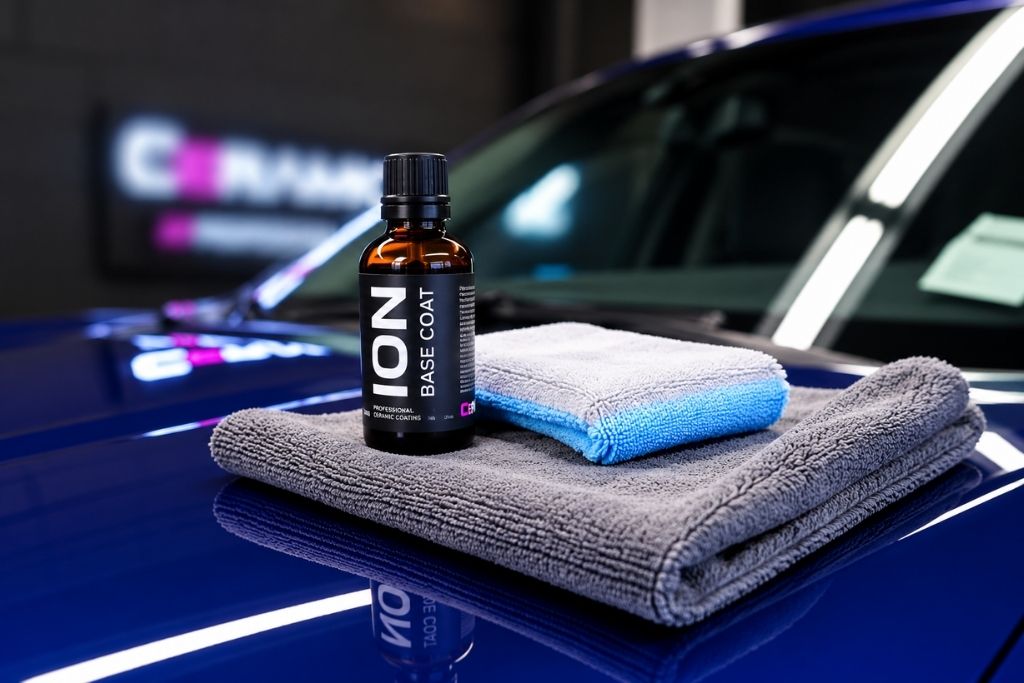
Professional ceramic coating paint preparation requires more than washing a car and applying a product.
Even paint that looks clean may contain embedded particles, old wax, oils, or polishing residue.
A typical preparation process includes the following steps.
1. Thorough Exterior Wash
We begin with careful exterior cleaning to remove loose dirt, grime, and road film.
Proper washing reduces the likelihood of introducing additional scratches during preparation.
2. Paint Decontamination
Iron fallout removal products help dissolve embedded ferrous particles, while an appropriate clay bar treatment can remove remaining bonded contaminants.
Not every vehicle needs the same treatments, and mechanical decontamination must be performed carefully to avoid unnecessary marring.
3. Paint Inspection and Correction
Next, we evaluate the paint's appearance and condition.
When appropriate, polishing helps reduce swirl marks, light scratches, and other correctable imperfections.
4. Final Surface Cleaning
After polishing, a suitable panel preparation product removes remaining oils and residues.
This helps create the clean surface required for proper ceramic coating application.
5. Ceramic Coating Installation
Once preparation is complete, the selected coating can be installed according to its manufacturer's instructions.
As a certified Ceramic Pro Elite Dealer, Quality Auto Spa emphasizes proper preparation as an essential part of professional vehicle protection.
UNDERSTANDING THE TRADE-OFFS
What Happens If You Skip Paint Correction Before Ceramic Coating?
Skipping paint correction doesn't automatically mean your ceramic coating will fail.
If the painted surface is properly cleaned and prepared, a compatible coating can still be installed without machine polishing.
However, existing visual imperfections will generally remain.
This means:
Swirl marks and light scratches can remain visible.
The final finish may look less refined.
Enhanced reflections may reveal certain existing defects more clearly.
Correcting those defects later may require removing and reapplying coating in the affected areas.
This last point matters.
Once the coating has been installed, A controlled process using a polishing machine, pads, and abrasives to improve surface defects. Polishing can remove existing ceramic coating in the area being treated. an affected panel will generally remove the protective layer where polishing occurs.
That's why paint correction before ceramic coating is often more practical when improving appearance is a priority.
Can Ceramic Coating Protect Against Future Scratches?
Ceramic coatings can offer certain protective benefits, but they aren't No ceramic coating can completely prevent scratches. Its protective qualities should not be confused with resistance to significant physical damage. .
They also aren't designed to stop Small areas of paint damage caused by stones or other hard road debris striking the vehicle's exterior. .
If you regularly drive on Long Island highways and want additional protection against road debris, consider learning about paint protection film for New York drivers .
For a broader explanation of coating capabilities, see our guide to ceramic coating protection, maintenance, and realistic expectations .
LOCAL PAINT PROTECTION EXPERTISE
Why Paint Correction Matters for Long Island Car Owners
Driving conditions around St. James and throughout Long Island can be demanding on vehicle finishes.
Winter road salt, seasonal pollen, airborne contaminants, and regular washing can affect paint appearance over time.
Even careful owners may eventually notice minor swirl marks or dull patches.
Winter Road Salt
Road salt residue and winter grime can accumulate on exterior surfaces, making careful cleaning important.
Seasonal Pollen
Pollen and other seasonal debris can settle on paint, requiring proper washing to avoid unnecessary marring.
Airborne Contaminants
Bonded environmental particles may remain on vehicle paint even after an ordinary wash.
Regular Washing
Improper washing and drying techniques can gradually introduce fine swirl marks and light scratches.
That's why we encourage vehicle owners to think about paint conditions before choosing a protection service.
At Quality Auto Spa , we offer professional detailing, paint correction, ceramic coating, and A transparent protective film designed to help shield painted surfaces against physical damage such as stone chips and minor abrasions. services to address different automotive care needs.
As a certified A professional dealer designation associated with Ceramic Pro's automotive protection products and installation network. serving St. James and surrounding Long Island communities, our focus is on helping customers understand the preparation and protection appropriate for their vehicles.
Give Your Car the Protection It Deserves
Whether you drive a new luxury sedan, an everyday SUV, or a weekend sports car, explore our professional ceramic coating services in St. James, NY to learn more about your options.
Explore Our Ceramic Coating Services →WATCH CERAMIC COATING IN ACTION
Shine Brighter, Stay Protected: See the Magic of Ceramic Coating!
Want to give your car that head-turning shine while keeping its paint protected? Ceramic coating helps enhance your vehicle's gloss, repel water, and make everyday maintenance easier. At Quality Auto Spa, we're all about helping your car look its best while providing long-lasting protection. Check out the video below and discover why ceramic coating is a popular choice for car owners who love a stunning, glossy finish!
Discover the appearance and protective benefits of ceramic coating for your vehicle.
Ready to Give Your Car a Brilliant Shine?
Discover professional ceramic coating options at Quality Auto Spa in St. James, NY, and find the right protection for your vehicle.
Explore Our Ceramic Coating Services →YOUR NEXT STEP TO A BETTER FINISH
Ready for That Showroom Shine? Let's Get Your Paint Coating-Ready!
Paint correction before ceramic coating can make all the difference when swirl marks, light scratches, or dull spots are keeping your car from looking its best. By addressing these imperfections first, you can achieve a smoother, glossier finish that's ready for long-lasting protection.
But here's the good news: not every car needs extensive polishing. If your paint is already in great shape, proper cleaning and decontamination may be all it takes to prepare it for ceramic coating.
At Quality Auto Spa , we believe great results start with understanding what your vehicle actually needs. Whether you're driving a brand-new car or refreshing your daily ride, our team is here to help you make the right choice.
Ready to Bring Out the Best in Your Car's Finish?
If you're in St. James, NY, or anywhere across Long Island, let's give your vehicle the attention it deserves. Contact Quality Auto Spa today to discuss your paint correction and ceramic coating options and take the first step toward a stunning, protected finish.
Frequently Asked Questions
Do You Need Paint Correction Before Ceramic Coating on a New Car?
Not necessarily. New vehicles can have swirl marks or contamination from transportation and dealership preparation, but some only require decontamination. An inspection helps determine whether polishing is worthwhile.
Why Is Paint Correction Recommended Before Ceramic Coating?
It improves correctable paint imperfections before a transparent protective layer is applied. This helps create a clearer, glossier finish without expecting ceramic coating to conceal existing defects.
Does Ceramic Coating Hide Swirl Marks and Scratches?
No. Ceramic coatings don’t remove swirl marks or scratches. Some minor defects may appear less noticeable in certain lighting, but the underlying damage remains.
Is Paint Correction Safe for Older Vehicles?
It can be, but older paint may be thinner, previously repaired, or deteriorated. Paint condition and thickness should be evaluated before polishing.
Does Paint Correction Make Ceramic Coating Last Longer?
Paint correction mainly improves appearance. Proper decontamination and final cleaning support coating installation, while product quality, application, exposure, and maintenance influence longevity.
How Much Paint Correction Does My Car Need?
A vehicle with minor swirls may benefit from one-step correction, while more noticeable defects may call for two-step polishing. The appropriate level depends on paint condition and safety, not vehicle age alone.
Aon Malik is the owner of Quality Auto Spa in St. James, New York, a Ceramic Pro Elite Dealer specializing in professional automotive protection and appearance services. Through hands-on experience with vehicle care and protection, Aon helps drivers better understand their options for ceramic coatings, paint protection film, window tint, professional detailing, and related automotive services.
His goal is to provide clear, practical information so vehicle owners can make informed decisions based on their vehicle, driving habits, protection goals, and long-term care needs.
Quality Auto Spa
Ceramic Pro Saint James Elite Dealer in St. James, New York. Visit our studio, call our team, or open the location directly in Google Maps.
Open Quality Auto Spa in Google Maps- Monday 8:00 AM-5:30 PM
- Tuesday 8:00 AM-5:30 PM
- Wednesday 8:00 AM-5:30 PM
- Thursday 8:00 AM-5:30 PM
- Friday 8:00 AM-5:30 PM
- Saturday 8:00 AM-3:00 PM
- Sunday Closed
